Why Concrete Needs More Than Just Laying
Concrete is tough, but it is not maintenance-free. Without the right care after installation, even a well-laid driveway or path can start showing stains, surface wear, and cracking within a few years.
The good news is that most of this damage is preventable. A basic maintenance routine and a quality sealer go a long way toward keeping concrete looking clean and performing well for decades.
What Actually Damages Concrete Over Time
Water is the biggest culprit. When moisture works its way into the surface, it weakens the concrete from within, especially during freeze-thaw cycles or periods of heavy rain followed by dry heat.
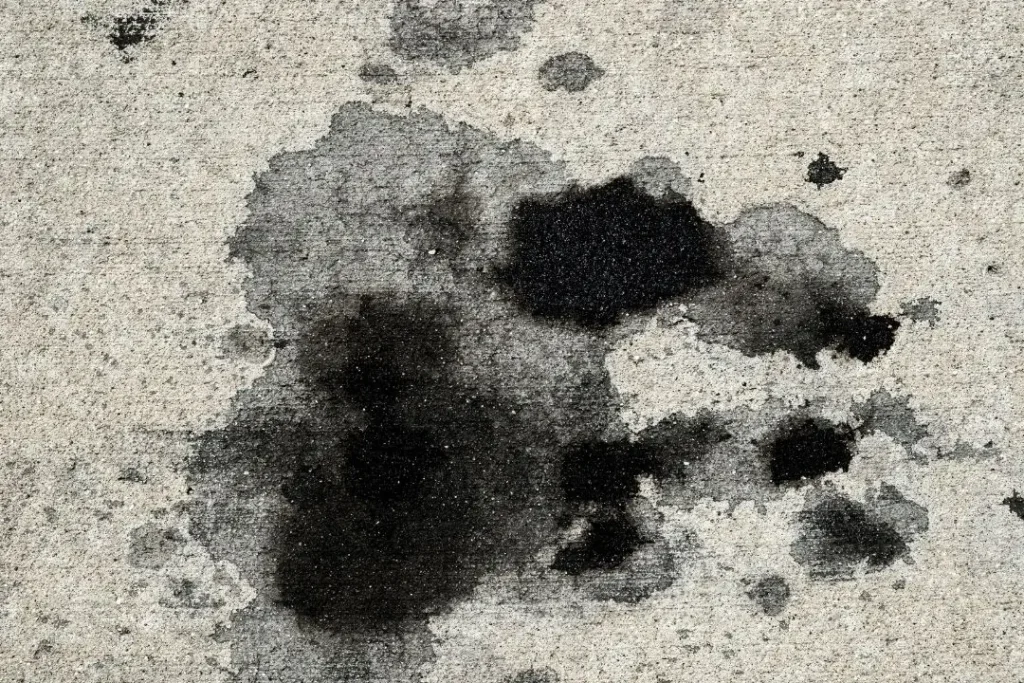
Oil, grease, and chemical spills from vehicles also break down the surface layer over time. Left untreated, these stains penetrate deep and become very difficult to remove.
Another common issue is efflorescence, the white powdery residue that appears when soluble salts migrate to the surface. It is mostly cosmetic, but it signals that moisture is moving through the slab in ways that can cause longer-term problems if ignored.
When to Seal New Concrete
New concrete needs time to cure before sealing. As a general rule, wait at least 28 days after the pour before applying any sealer. Sealing too early traps moisture inside the slab, which can cause surface blistering and reduce the sealer’s bond.
The surface should be clean, dry, and free of any curing compounds before you start. If a curing compound was applied during the pour, check with your concreter about whether it needs to be removed first.
Choosing the Right Concrete Sealer
Not all sealers suit every application. The two main categories are penetrating sealers and topical (film-forming) sealers, and they behave quite differently.
Penetrating Sealers
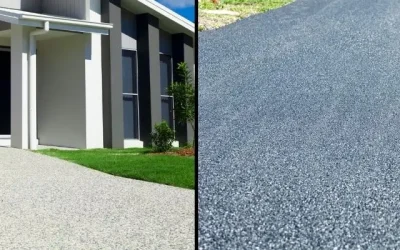
These soak into the concrete and react chemically with the surface to repel water and contaminants. They do not change the appearance of the concrete and are a solid choice for driveways, paths, and exposed aggregate surfaces where you want protection without a sheen.
Penetrating sealers tend to last longer between reapplications and hold up well in high-traffic areas.
Topical Sealers
Topical sealers sit on top of the surface and form a protective film. They can add a gloss or satin finish, which suits decorative concrete like exposed aggregate or coloured slabs. The trade-off is that they can wear through in high-traffic spots and need reapplication more regularly.
For driveways and outdoor areas, look for a sealer rated for vehicle traffic and UV exposure. Sealing concrete correctly protects against staining, surface wear, and moisture ingress, which are the three main causes of premature deterioration.
How to Seal a Concrete Driveway Step by Step
The process is straightforward, but preparation makes the difference between a sealer that lasts and one that peels within a season.
Step 1: Clean the Surface Thoroughly
Remove all oil stains, dirt, and debris before you start. A degreaser works well on oil spots, and a pressure washer handles general grime. Let the surface dry completely before moving on.
Step 2: Repair Any Cracks or Damage
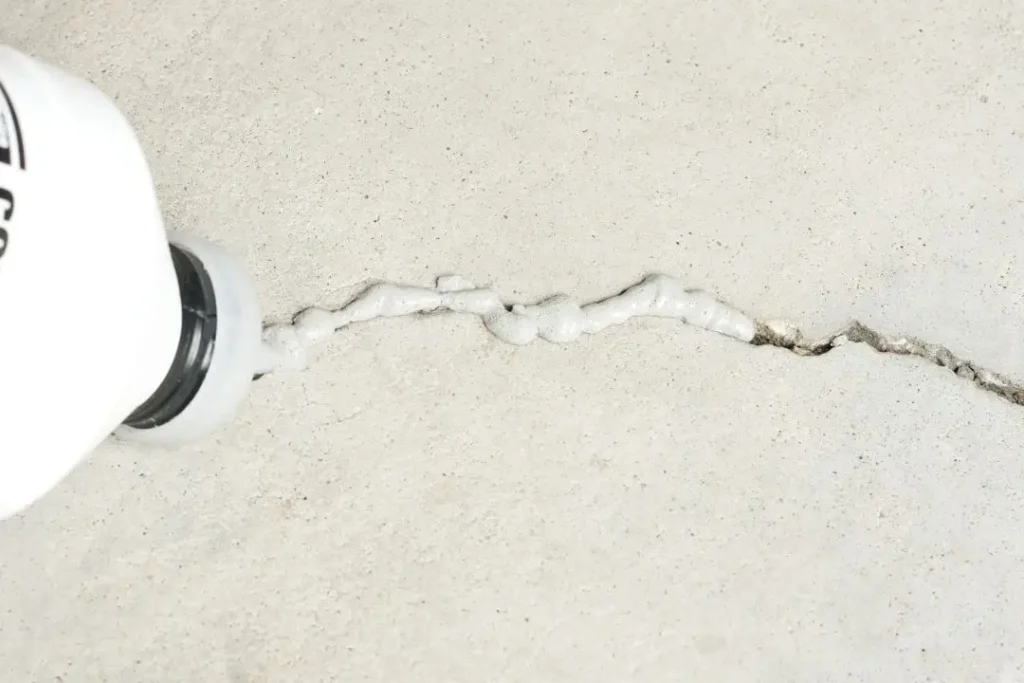
Fill any cracks with a concrete crack filler and allow it to cure fully. Sealing over existing cracks without repairing them first just locks in the problem. If the surface has significant spalling or deterioration, concrete resurfacing may be a better starting point than sealing alone.
Step 3: Apply the Sealer
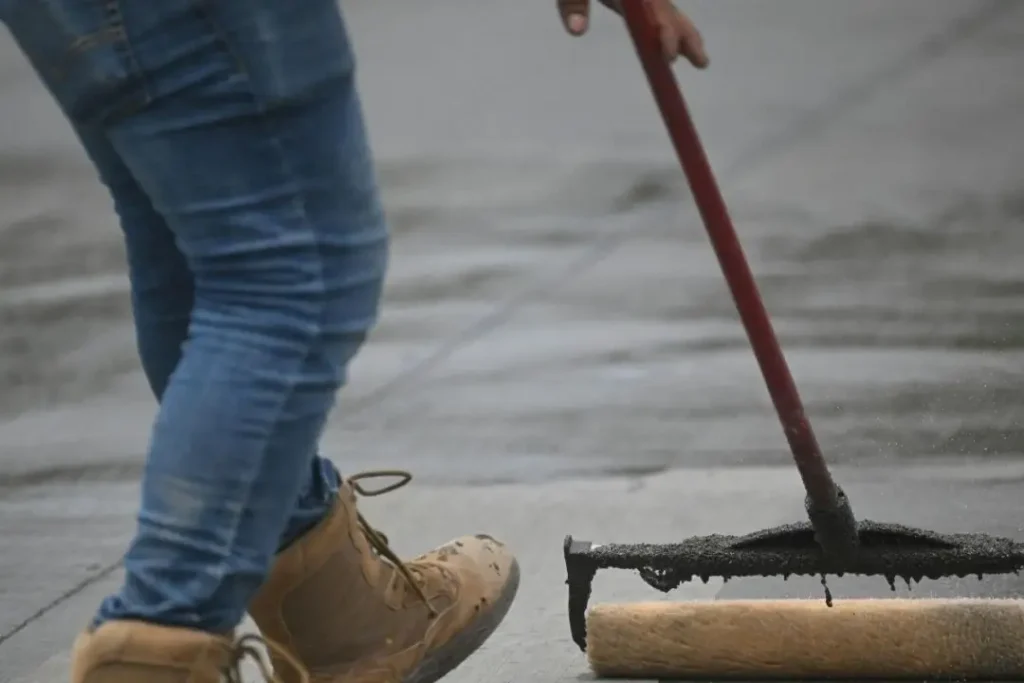
Use a roller or sprayer depending on the product instructions. Apply thin, even coats rather than one thick coat. A thick application traps air and leads to bubbling or an uneven finish.
Most sealers require two coats, with the second applied perpendicular to the first. Check the product’s drying time before allowing foot or vehicle traffic back onto the surface.
How Often Should You Reseal Concrete?
Penetrating sealers typically last five to ten years depending on traffic and exposure. Topical sealers in high-use areas may need reapplication every two to three years.
A simple water test tells you when it is time. Pour a small amount of water onto the surface. If it beads up, the sealer is still doing its job. If it soaks in quickly, the surface needs resealing.
Day-to-Day Concrete Maintenance That Makes a Difference
Sealing is not a substitute for regular upkeep. Rinse driveways and paths periodically to remove grit and debris that can grind into the surface under foot and vehicle traffic.
Clean up oil and chemical spills as soon as they happen. The longer they sit, the deeper they penetrate. A sealed surface gives you more time to act, but it is not a permanent barrier against neglect.
Avoid using harsh de-icing salts on concrete surfaces during cold weather. Salt accelerates surface deterioration and can contribute to the kind of cracking and spalling that shortens the life of a slab significantly.
Signs Your Concrete Needs Attention Now
Fading colour, a chalky or dusty surface, visible staining that will not wash off, and hairline cracks are all early warning signs. Catching these issues early is far cheaper than dealing with structural damage later.
If the surface has started to flake or pit, sealing alone will not fix it. At that stage, a professional assessment is the right next step before committing to any product or repair approach.
Talk to a Local Concreter Before You Start
If you are unsure about the condition of your concrete or which sealer suits your surface, it is worth getting a professional opinion before spending money on products that may not be right for the job.
We are concreters servicing Langwarrin, Frankston and surrounding suburbs. We can assess your existing concrete and advise on the best maintenance or repair approach for your situation.
To get straightforward advice or request a quote, call us on (03) 9000 0676.